
Which gets preference in the bigger scheme of conservation biology, the species or the community? We suggest a differential focus on conserving imperiled species. These are the building blocks that can be recycled again and again as community compositions inevitably change in future human generations under the influences of climate shifts, ecological interactions, and accidents of dispersal. Diverse communities can assemble and reassemble as long as the building blocks persist. Species, once lost, will not be coming back.
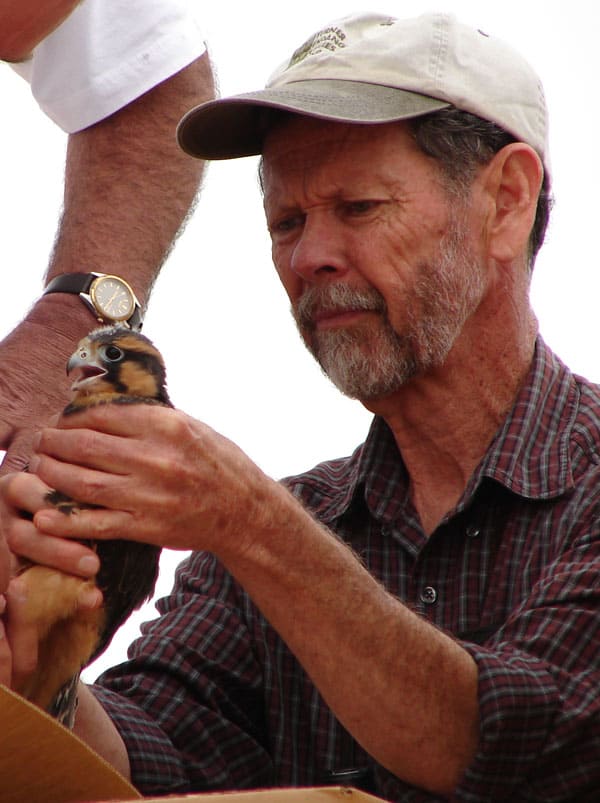
JOE TRUETT began working with Ted Turner’s landmark efforts to conserve native species in 1996 when he was contracted to restore black-tailed prairie dogs to the Armendaris and Ladder ranches. In 1998 he was hired as the first senior ecologist for the Turner Endangered Species Fund (TESF) and Turner Biodiversity Divisions (TBD). He worked in that capacity until his retirement in April 2010. Joe died on February 27, 2011 after an honorable battle with cancer.
During his 13 years with TESF he provided a steady and experienced presence on a daily basis. His intellectual, emotional, and practical contributions to the work were noteworthy. Throughout his career and especially during TESF’s fledging stage, Joe was admired and relied on for his unique capacity to synthesize large amounts of sometimes disparate information to identify broad, unifying principles that give order to otherwise chaotic patterns. He was an ecologist of the finest kind, and countless imperiled species are more secure because of his work.
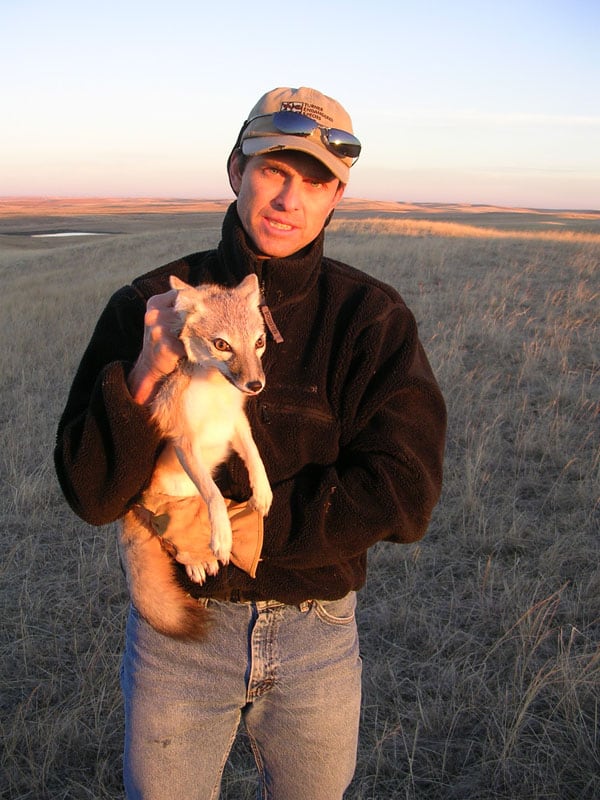
Kevin served as the project leader of TESF’s swift fox restoration and conservation project in South Dakota. Under his direction, over 200 foxes were reintroduced to Bad River Ranches and environs. Through determination, honesty, and an open mind, Kevin enrolled over 70 private landowners as supporters of the effort. His dedication to the swift fox project was clearly contagious.
Always pushing himself to perform at a high standard, Kevin earned admission to the Ph.D. program at South Dakota State University’s Department of Wildlife and Fisheries Science. It was widely believed that his dissertation would stand as the seminal publication concerning the socio-political and biological aspects of swift fox restoration and conservation.
Without doubt Kevin’s leadership was singularly important for securing a bright future for the swift fox, a vital member of our native grasslands.
Which gets preference in the bigger scheme of conservation biology, the species or the community? We suggest a differential focus on conserving imperiled species. These are the building blocks that can be recycled again and again as community compositions inevitably change in future human generations under the influences of climate shifts, ecological interactions, and accidents of dispersal. Diverse communities can assemble and reassemble as long as the building blocks persist. Species, once lost, will not be coming back.
Dr. Joe Truett, Restoration Ecology
JOE TRUETT
Dr. Joe Truett began working with Ted Turner’s landmark efforts to conserve native species in 1996 when he was contracted to restore black-tailed prairie dogs to the Armendaris and Ladder ranches. In 1998 he was hired as the first senior ecologist for the Turner Endangered Species Fund (TESF) and Turner Biodiversity Divisions (TBD). He worked in that capacity until his retirement in April 2010. Joe died on February 27, 2011 after an honorable battle with cancer.
During his 13 years with TESF he provided a steady and experienced presence on a daily basis. His intellectual, emotional, and practical contributions to the work were noteworthy. Throughout his career and especially during TESF’s fledging stage, Joe was admired and relied on for his unique capacity to synthesize large amounts of sometimes disparate information to identify broad, unifying principles that give order to otherwise chaotic patterns. He was an ecologist of the finest kind, and countless imperiled species are more secure because of his work.
Of particular importance was Joe’s leadership to recover the critically imperiled bolson tortoise. Under his direction, the project provided new insight into a cardinal question of restoration ecology: Restore to what?
The bolson tortoise had been extirpated from the United States for thousands of years. Consequently, some claim that restoration there is uncalled for since historic conditions did not include the species. As was his style, Joe challenged conventional thinking and by doing so, presented an alternative restoration paradigm with a great potential to serve imperiled species well into the future.
KEVIN HONNESS
Kevin Honness worked tirelessly on behalf of imperiled species as a valuable member of the Turner Endangered Species Fund (TESF) until his death on June 7, 2008 from a kayaking accident.
Kevin served as the project leader of TESF’s swift fox restoration and conservation project in South Dakota. Under his direction, over 200 foxes were reintroduced to Bad River Ranches and environs. Through determination, honesty, and an open mind, Kevin enrolled over 70 private landowners as supporters of the effort. His dedication to the swift fox project was clearly contagious.
Always pushing himself to perform at a high standard, Kevin earned admission to the Ph.D. program at South Dakota State University’s Department of Wildlife and Fisheries Science. It was widely believed that his dissertation would stand as the seminal publication concerning the socio-political and biological aspects of swift fox restoration and conservation.
Without doubt Kevin’s leadership was singularly important for securing a bright future for the swift fox, a vital member of our native grasslands.