![]() |
![]() |
| HOME |
ABOUT US |
TESF TEAM |
ALL PROJECTS |
PUBLICATIONS |
REPORTS |
JOB ANNOUNCEMENTS |
CONSERVATION LINKS |
ACHIEVEMENTS
& HONORS |
PHOTO GALLERY |
![]() |
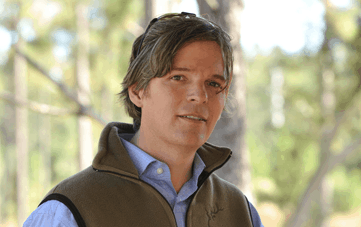
Beau
Turner - Among Beau’s challenges is the directive to balance a strong concern and ethic for environmental protection with several for-profit ventures, including the largest bison operation in the world. He serves as a Trustee for the Turner Foundation, Inc., a private family foundation that focuses on environmental and population-related causes, and serves on the boards of the Jane Smith Turner Foundation, the Captain Planet Foundation, the Wetlands America Trust and the Peregrine Fund. He is also a council member for the Jim Range Conservation Fund. Beau works closely with
groups such as the National Wild Turkey Federation,
Boone and Crockett Club, Ducks Unlimited, Tall Timbers
Research Station and Land Conservancy (an organization
that promotes sound stewardship among land owners in
the Red Hills region of Georgia and Florida). Beau’s
greatest passion is getting young people outdoors and
excited about nature and the environment. To help
achieve this goal, he founded the Beau Turner Youth
Conservation Center (BTYCC) near his home in Florida
in 2008. The BTYCC is a place where children are
encouraged to be active outdoors. They learn about
conservation, interact with nature, acquire fishing,
archery, hunting and camping skills and study
alternative energy sources (the BTYCC is the first
youth center in Florida powered entirely by solar
power). Currently, Beau is working on growing the
youth center concept and developing the BTYCC into a
model for similar centers nationwide. |
![]() |
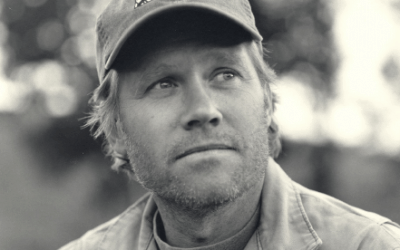
Mike Phillips -
Mike has served as the Executive Director of the Turner Endangered Species Fund since the nonprofit was launched by Ted Turner in 1997, where he oversees all activities of the Fund. Mike has played a key role in wolf conservation and recovery. From 1986–1994, he was the Field Coordinator for the Red Wolf Recovery Program. He was also instrumental in the return of gray wolves to the Yellowstone Ecosystem, serving as Project Leader for the Yellowstone gray wolf restoration effort from 1994–1997. Mike received his B.Sc. in Ecology, Ethology, and Evolution from the University of Illinois in 1980, and his M.Sc. in Wildlife Ecology from the University of Alaska in 1986. He has conducted wildlife research, with an emphasis on large carnivores, throughout the United States and Australia. Mike’s career focuses on imperiled species recovery, integrating private land and conservation, ecological economics, and socio-political aspects of natural resource use. In 2009, Mike was appointed to the Turner Energy and Ecosystem Committee. This focused on ensuring that the many private and public efforts of Ted Turner and his family are successful, while reducing greenhouse gas emissions by maximizing energy efficiency and minimizing waste. In 2006 Mike entered the political arena through election to the Montana legislature as the representative for House District 66, Bozeman. Shortly thereafter, Mike founded the Montana Legislative Climate Change Caucus. In 2009, Mike was elected as the Chairman of the House Democratic Caucus. During this legislative session, Mike played a critical role in crafting and passing the nation’s most comprehensive law for sequestering CO2 in geological formations. Mike was re-elected in 2010 and will serve through 2012 as a member of the legislature’s energy, tax, and fish and wildlife committees. In addition to representing Montana’s 66th House District, Mike served as a co-chair of Montana Democratic Legislative Campaign Committee during 2007 and 2008. In the fall of 2009 Mike was recruited by the White House to join a coalition of state legislative leaders to work with the Obama administration and Congress to pass clean energy jobs and climate change legislation. Mike is an experienced writer and public speaker. He has authored or co-authored hundreds of reports and over 65 publications, including peer-reviewed articles, book chapters, conference proceedings, government reports, and popular articles. Mike has delivered over 200 public presentations to conservation organizations and professional conferences, including several invited plenary, keynote, and banquet presentations. Mike lives in Bozeman
with his wife (Linda, research scientist and Ph.D.
student, Ecology Department, Montana State
University), their four children (Grace – 20, Drake –
15, Samuel – 14, Annabelle 2 years), and their Jack
Russell terrier (Scout). |
![]() |
Dave Hunter -
Dave has served as the veterinarian for Turner Enterprises, Inc and Turner Endangered Species Fund since October 1998. Dave initiated his undergraduate work at New Mexico State University and received his B.Sc. in 1974 and Doctor of Veterinary Medicine degree from Washington State University in 1976. He then undertook an internship at the Animal Medical Center in New York. After leaving private practice in Seattle, WA, Dave was the Wildlife Veterinarian with the California Department of Fish and Game from 1986 to 1989. From 1989 to 1998, he continued his wildlife career as the Wildlife Veterinarian for Idaho working with the Idaho Departments of Fish and Game and Agriculture. He has conducted research on wildlife health issues on many avian and mammalian species. He is currently an Adjunct Professor at Texas A & M University, associate Professor of Research at Boise State University, University of Idaho, and Montana State University. He is a founding member of International Wildlife Veterinary Services, on the Board of Directors of International Wildlife Health Institute (IWHI), and a former president of the American Association of Wildlife Veterinarians. Dave has written several book chapters and authored many peer-reviewed publications. He lectures throughout the world on disease, immobilization, welfare and health concerns of wildlife. Currently he is involved in many health issues at the interface between ecosystems, wildlife, livestock and humans. |
![]() |
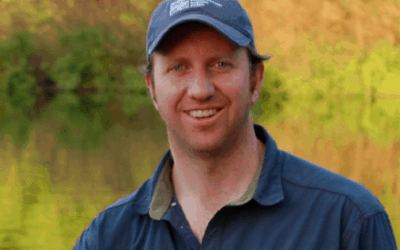
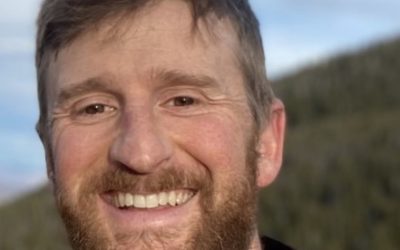
Carter Kruse - Carter
has been the Aquatic Resource Coordinator with Turner
Enterprises, Inc. and the Turner Endangered Species Fund
since June of 2000.
He earned a B.Sc. in Wildlife and Fisheries
Sciences from South Dakota State University in 1993 (go
Jacks!), and M.Sc. and Ph.D. in Zoology from the
University of Wyoming in 1995 and 1998, respectively. Prior to
joining the Turner organization, Carter worked for the
Federal Energy Regulatory Commission in Washington DC. As
the senior aquatic scientist for the Turner
organization, Carter is involved in a variety of
projects ranging from water rights and permitting to
riparian habitat and native species conservation. He is the
project manager for conservation and restoration of
several native aquatic species on Turner properties,
including Rio Grande and westslope cutthroat trout. Other projects
include amphibian conservation, aquatic diseases,
climate change, restoration research, efforts to manage
agricultural water resources for ecosystem benefits, and
aquatic population monitoring. Professional
interests include conservation biology/restoration
ecology, biological invasions, and community ecology. Carter has
co-authored several book chapters and technical
articles, and serves as an adjunct/affiliate professor
at Montana State University, Idaho State University, and
New Mexico State University. Carter is an
active member of several professional organizations
including the American Fisheries Society, recently
serving as the president of the Montana Chapter. Carter lives near Bozeman with his wife and
five kids, and spends his spare time tripping over
Legos, keeping home improvement stores in business,
and pursuing outdoor activities.
|
![]() |
Magnus McCaffery - |
![]() |
Dustin Long - |
![]() |
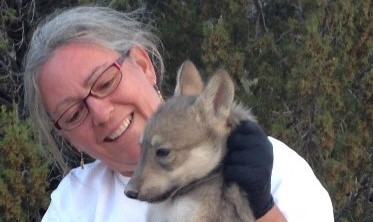
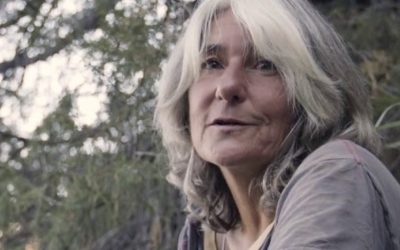
Valpa Asher -
Val has served as wolf biologist for the Turner Endangered Species Fund since May of 2000. Working closely with the U.S. Fish and Wildlife Service and Montana Fish, Wildlife and Parks, she was a wolf specialist for southwest Montana from 2000-2009. It was a notable achievement for TESF, as a private organization, to assist state and federal agencies with on-the-ground wolf recovery efforts. In 2010, her focus shifted to the Flying D Ranch, which houses one of the largest wolf packs outside of Yellowstone Park. Here she investigates how wolves affect ranched bison and native elk populations. In addition, Val was the field team leader for Arizona Game and Fish Department on the Mexican wolf recovery project from 1998 to 2000. From 1994 to 1997 she served as wolf field biologist for U.S. Fish and Wildlife Service in Idaho and was part of the team sent to Canada to retrieve wolves for the reintroduction to Yellowstone and Central Idaho. Val received her B.A. in Environmental Studies from Warren Wilson College in 1992. She has been involved in wolf, ungulate, sage grouse and peregrine falcon research throughout the U.S. Her professional interests include canid behavior, restoration ecology, and working with private landowners to promote wildlife conservation. |
![]() |
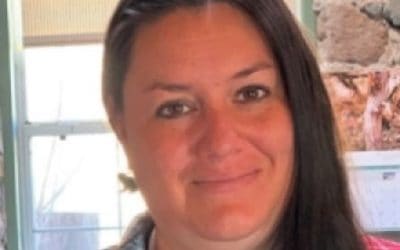
Chris Wiese
- Chris received
Bachelor’s degrees in Biochemistry and Organismal
Biology from the University of Kansas in Lawrence,
Kansas, in 1989, and a PhD in Cell Biology from the
Johns Hopkins University School of Medicine in 1996.
Following a post-doctoral fellowship in the
Department of Embryology at the Carnegie Institution
of Washington in Baltimore, Chris took a position as
an Assistant Professor in the Biochemistry
Department at the University of Wisconsin – Madison
where she studied the biochemistry of cellular
organization during cell division. Chris was
introduced to the desert and the need for conserving
the tortoises that live there in 2007, and became
particularly enthralled with the endangered Bolson
tortoise. In April 2012, she joined the Turner
Endangered Species Fund to oversee the Bolson
tortoise and Mexican wolf projects. Chris has won
several prestigious awards for her cell biology work
and has authored a number of journal articles and
book chapters. She currently holds an appointment as
an Adjunct Professor in the Department of Biology at
New Mexico State University. |
![]() |
Hanne
Small - Hanne has been working with the Turner Endangered Species Fund since April 2011. She is currently working on the Chiricahua leopard frog project at the Ladder Ranch in New Mexico. She earned her B.S. in Wildlife Science with a minor in Forestry from Virginia Tech in 2010. While in college, she worked in Colorado studying the spread of plague by trapping prairie dogs and small mammals. In addition, she studied parental in swift foxes. In 2010, she worked for the USFWS, helping to restore numerous species including pika, bats, frogs, and invertebrates, as well as working on feral horse issues. Hanne is interested in conservation of wildlife, and more specifically bats and amphibians. She would like to pursue a graduate degree in the future. |